
How to Check Criminal History in Trion
Trion records do not sit behind one public search. Sort the request by event, agency, and stage. The police narrative, county booking, town docket, county prosecution, and GCIC history each answer a different question.
- Contact Trion Police for a report created by a town officer, using the incident date, location, and number if known.
- Ask the town for its Open Records Act submission channel, copy format, redaction rules, and cost estimate.
- Contact the municipal clerk for a citation, city ordinance matter, court date, warrant tied to a town case, or disposition.
- Call Chattooga Detention Center for recent custody and use the proper county clerk after a criminal charge is filed.
- Choose Georgia Felon Search or a GCIC personal-history route only when the question requires the matching statewide product.
The county criminal history overview covers those later layers in depth. Trion inquiries should remain focused on the town-created file first.
Contacting Trion Police for Records
The official Trion Police page lists Chief David Gilleland and 706-734-3665. Published office hours are 9 a.m. to 5 p.m. No verified report request form, records email, arrest blotter, case portal, or police app was found. A phone call and counter request are the documented route.
Give the report type, a narrow date and time, exact location, names needed to identify the event, and any incident number. Ask who serves as records custodian and whether the town accepts a written request by mail or fax. Do not send the request to the county sheriff merely because the event later produced a county booking. The creator normally holds the original narrative.
Trion Police Department
706-734-3665
Published office hours: 9 a.m. to 5 p.m.
Verify the current counter location before travel.
The Trion Police Department
Trion Police documents calls, town incidents, traffic enforcement, arrests, and evidence handled by its officers. Its report remains separate from a detention-center intake and later court file. That distinction matters when a reader wants the officer's account rather than bond status or a final disposition.
If the office is closed after an incident, do not use an emergency line merely to seek a copy. Wait for business hours unless there is a current safety issue. Confirm the responding agency first because sheriff deputies or Georgia State Patrol can create a different file even when the location has a Trion mailing address.
The police page pictured below is the source for the department contact. It demonstrates why the official town channel should lead a Trion report search.
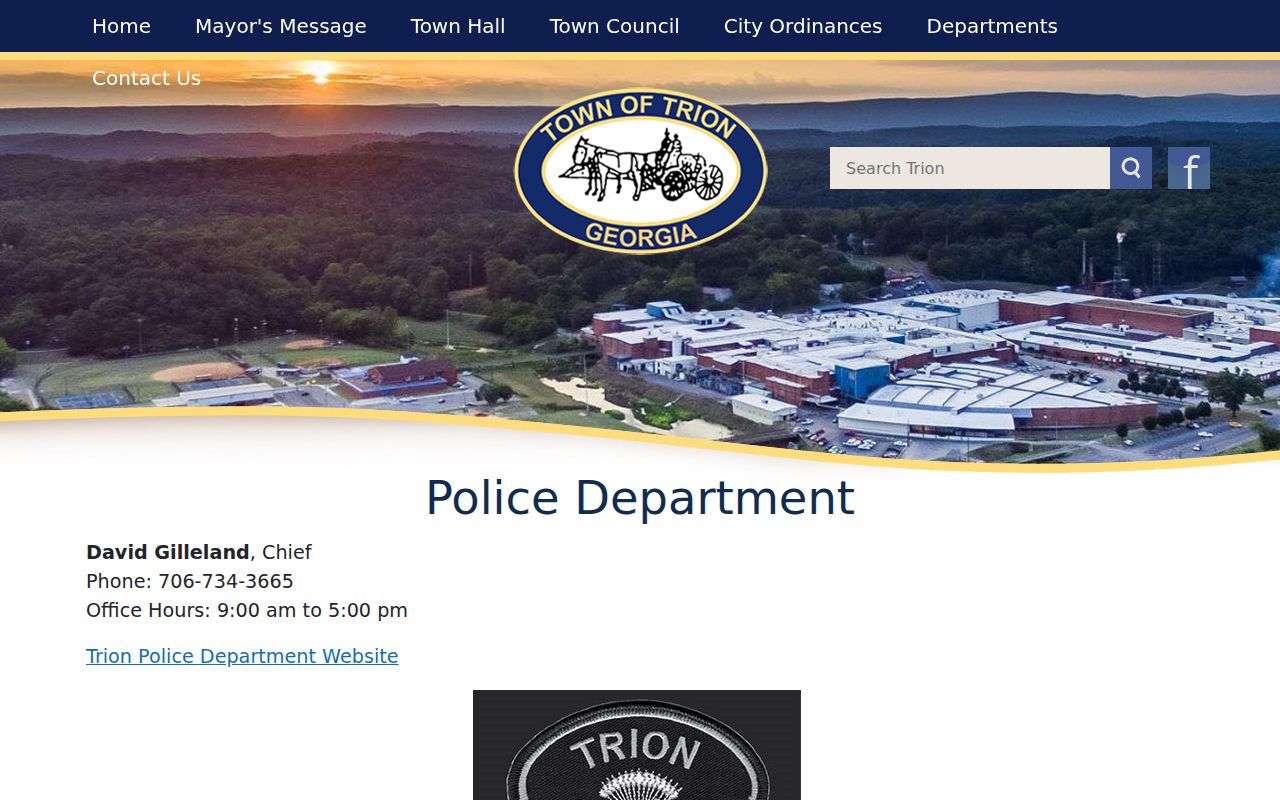
Current staff, office location, and release steps should be verified by phone before a request is sent.
No Trion Blotter Does Not Mean No Record
The town did not publish a verified arrest log or report database during the research sweep. That absence says nothing about whether Trion Police made a report. It means the reader must use the official counter, telephone, or Open Records Act route instead of expecting a name result on the web.
A written request should be narrow enough for staff to locate the file. Include the event date, approximate time, street or site, incident type, and report number. Request a native electronic copy when one exists and ask for an estimate before staff performs chargeable search or redaction work. A blank county portal result is also weak evidence because the town narrative and county booking use different systems.
No-result caution: A missing web result does not prove that Trion Police, the municipal clerk, or a county court holds no record.
Arrests and Bookings in Trion
When Trion Police makes an arrest, the town report stays with police while booking is traced to Chattooga Detention Center. No separate Trion holding facility was verified. The booking file can show intake details, arresting agency, allegations, bond, holds, release, and transfer as maintained. It is not a verdict.
For current county custody, call 706-857-0721. The sheriff's main line at 706-857-3411 can route records questions, and the sheriff publishes an Open Records Request PDF for arrest or booking records it holds. After prosecutors file a case, use the correct court clerk. This fallback chain is more sound than a private arrest site and preserves the difference between an allegation and an outcome.
The county-level arrest and booking page explains how quickly jail fields can change.
Trion Pine Street and County Jail Split
Trion Town Hall is listed at 1220 Pine Street, Trion, GA 30753, with P.O. Box 850, telephone 706-734-2332, and fax 706-734-7727. It is the municipal fallback when no police form or case portal is published. Call first to confirm which clerk accepts a request and where it should go.
The county jail channel is outside town government. That office answers custody and booking questions, not the full town officer narrative. A person seeking both should make two focused requests. The Town Hall image below comes from the official contact page and marks the municipal side of that split.
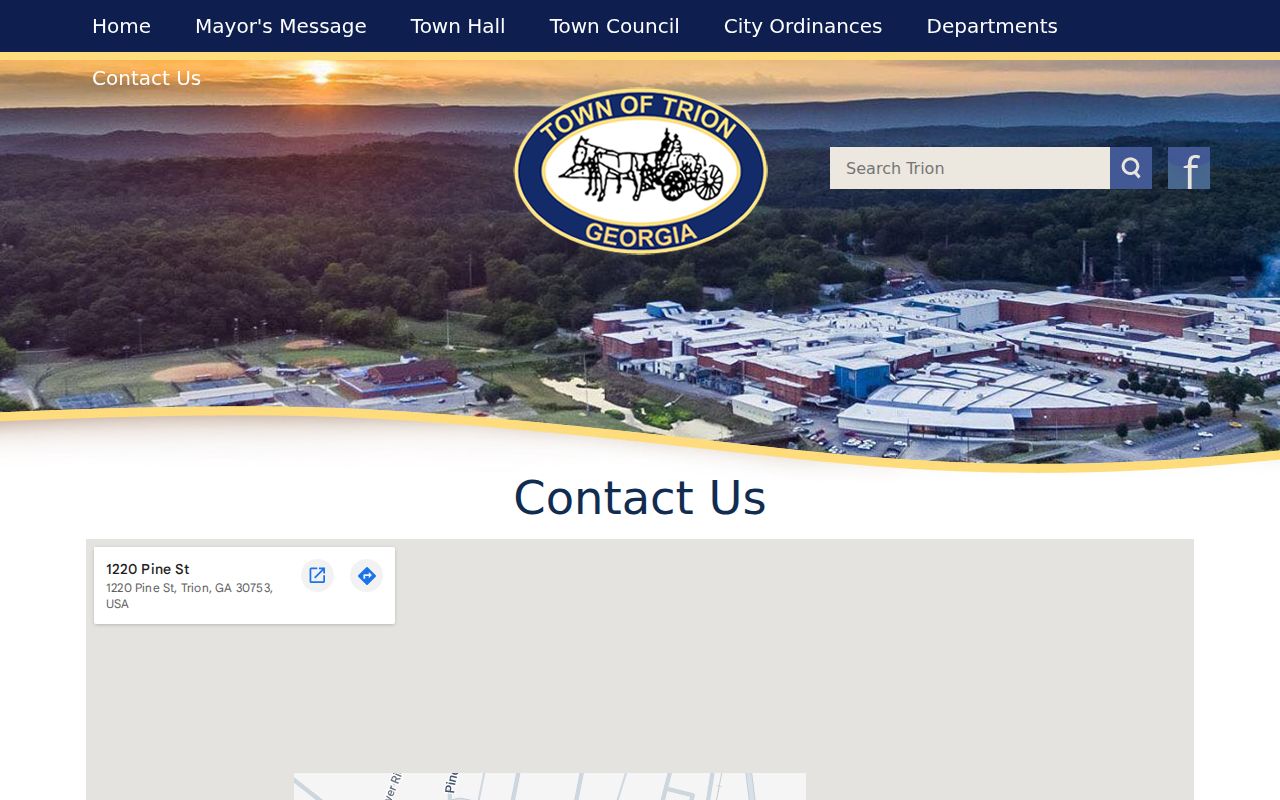
Use Pine Street for town routing and the county jail line for current detention.
Trion Municipal Court Records
No verified public municipal case portal, court schedule, or separate court page was located for Trion. The honest route is to contact Town Hall and ask for the current municipal clerk. Supply the defendant name as the clerk requests, citation or case number, and approximate date. Confirm whether the matter is municipal at all.
| Court Name | Trion municipal court channel; confirm the current court and clerk through Town Hall |
|---|---|
| Case Types Heard | Town ordinance, traffic, and other matters within municipal authority |
| Case Lookup Channel | Municipal clerk by telephone or counter; no verified public portal |
| What the Docket Shows | Citation or case number, scheduled event, status, and disposition as maintained |
| Copies & Fees | Ask the clerk about current copy methods and charges; no official schedule was located |
A felony filing does not belong in this municipal channel. Search Chattooga Superior Court for that prosecution, and use State Court for county misdemeanors within its jurisdiction.
Trion Council Minutes Add Policy Context
Town meeting records are not substitutes for a person's police or court file. They can, however, document changes in department policy, budgets, office arrangements, ordinances, and town procedures. Trion publishes official meeting agendas and meeting minutes.
Search those pages by meeting date or topic when the question concerns how a policy changed. Then request the underlying ordinance, resolution, or department record from the town custodian. Do not infer that a broad discussion proves a specific person was arrested or charged. The official agenda and minutes pages below show this separate research channel.
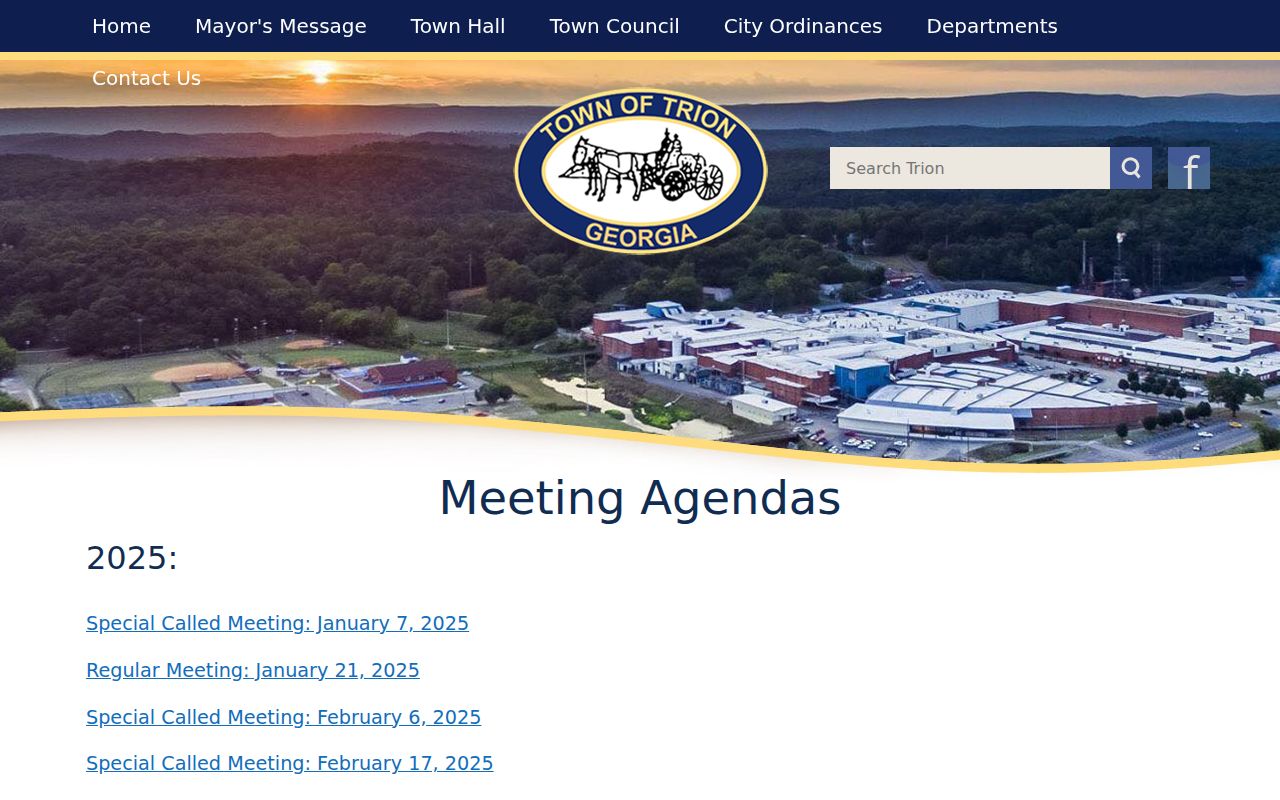
Agendas identify planned topics, but they do not establish an event-level arrest fact.
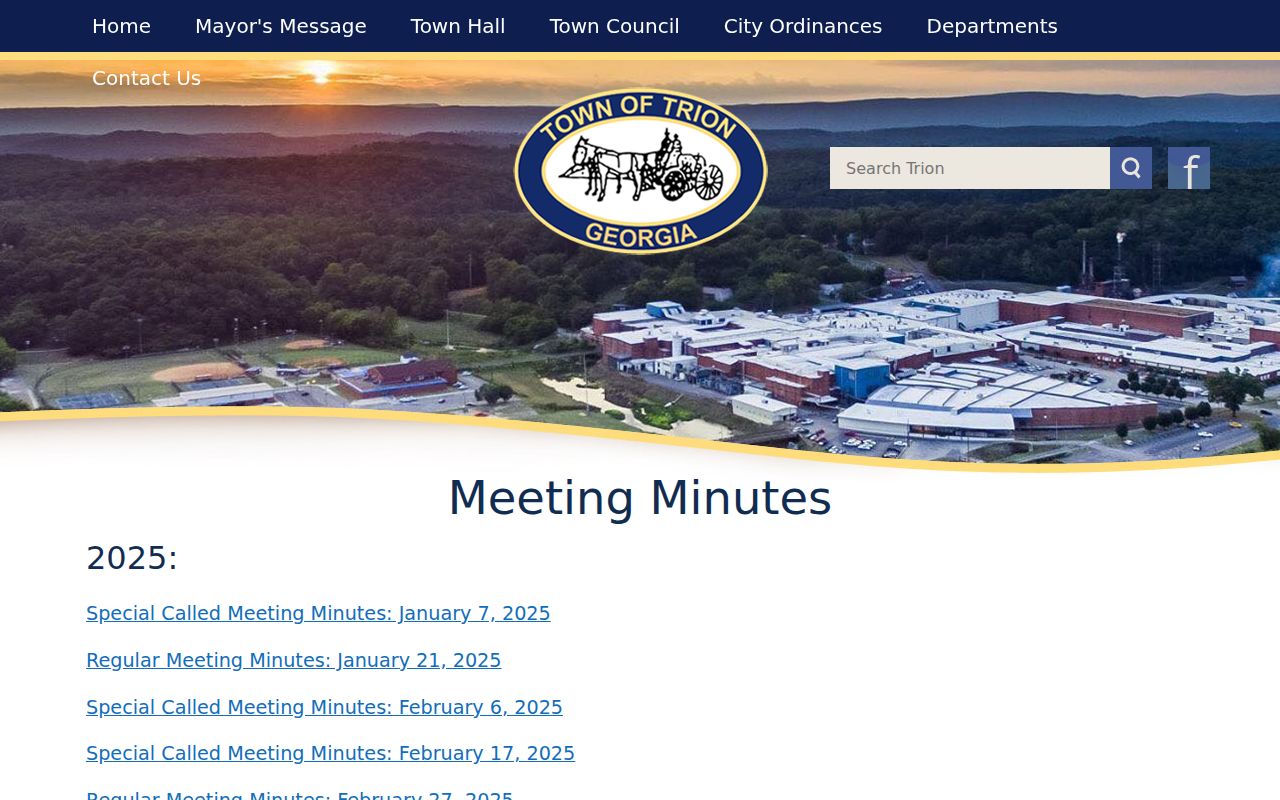
Minutes provide civic context, while police and court offices hold event-level records.
The official Town of Trion homepage supplies the broader municipal view shown next.
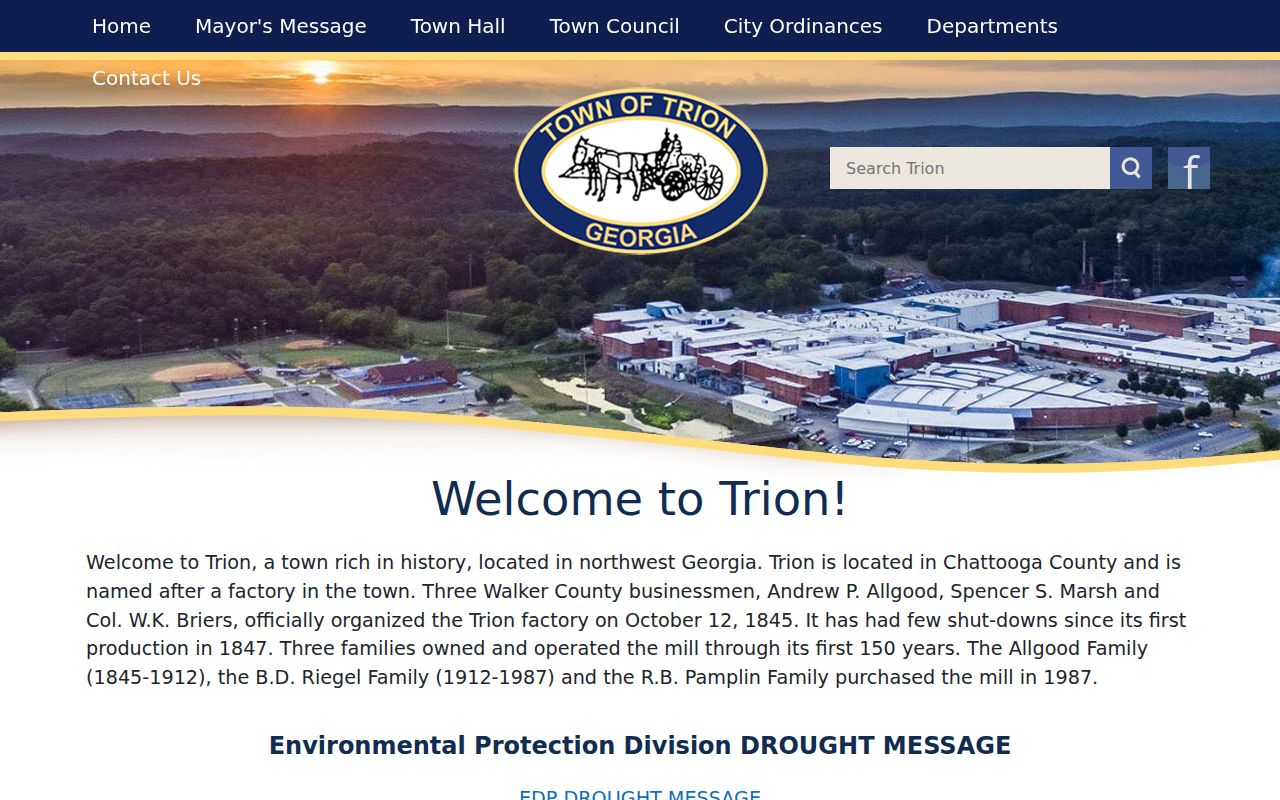
Use its live department links to recheck the current custodian before sending a request.
Where Trion Records End Up
A town officer creates the first report. The county jail creates booking data when it receives the arrestee. A municipal clerk maintains a qualifying town matter, while county courts keep state misdemeanor or felony prosecutions. Courts and custodial agencies later report qualifying data into the state history system.
Record flow: Trion Police › Chattooga County Courts › Georgia Bureau of Investigation, Georgia Crime Information Center
That line describes reporting, not a promise that every item becomes public in one place. Georgia Felon Search covers its authorized felony-conviction product. A city report can exist when that search returns nothing, and a recent county case may appear before GCIC receives the final disposition.
Trion Ordinance or County Criminal Case
A municipal citation stays with the town clerk when it falls within local authority. Felony prosecution belongs in Superior Court. State Court handles county misdemeanors and traffic within its jurisdiction, while Magistrate Court handles warrants, first appearances, and preliminary proceedings. Identifying the issuing officer and citation heading often reveals the right clerk.
| Clue | Likely first contact | Record sought |
|---|---|---|
| Trion citation | Municipal clerk | Town docket and disposition |
| County booking | Detention Center | Custody and release events |
| Felony charge | Superior Court clerk | Indictment, docket, judgment |
| Town officer narrative | Trion Police | Incident or arrest report |
Keep each identifier. A report number and court case number are not interchangeable.
Public Access Rules
The Georgia Open Records Act applies to town records subject to exemptions. A request should name the custodian, describe the exact record, and give a narrow date range. The town generally must produce responsive records within three business days or explain when production can occur. That response may include a cost estimate or lawful redactions.
Key Statutes:
Georgia Open Records Act, O.C.G.A. §§50-18-70 through 50-18-77 establishes the access and response framework.
O.C.G.A. §35-3-34(d.2) authorizes the public felony-conviction product with specified identity fields.
O.C.G.A. §35-3-37 covers correction, restriction, and related sealing procedures.
Active investigative matter, juvenile data, protected victim information, medical details, and private identifiers may be withheld or redacted. Ask for the specific exemption rather than assuming the whole Trion record is closed.
Older Trion Records Need More Detail
Older files may not be indexed online, and the town has no verified comprehensive portal. Give a year, incident location, former name spelling, agency, and any citation or report number. Ask whether the town retains the file, archived it, or transferred a court record to another custodian.
If Town Hall cannot locate the item, move by record type rather than repeating a broad name search. Police reports stay with the creator. Booking goes to the sheriff. Filed county cases go to the appropriate clerk. GCIC correction requires official documents from the source agency. This measured chain avoids the common error of treating no portal result as proof that no Trion criminal record exists.
Note: Small-population crime rates can swing sharply, so use exact official agency exports before drawing conclusions from annual counts.